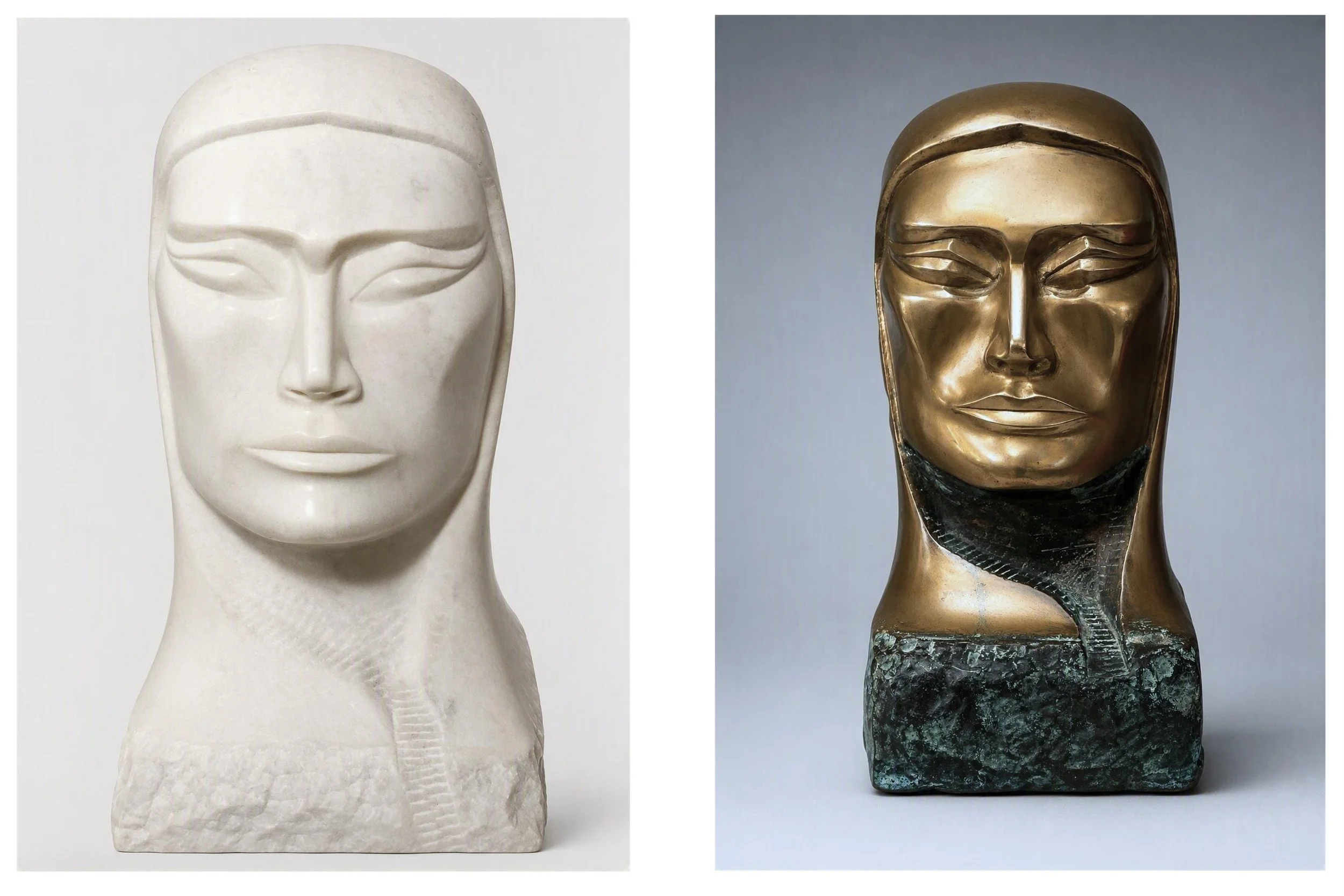
October Exhibition
Nicholas Georgouras
Athenas
This October, Thomas-Georgouras Studios celebrates two extraordinary milestones in the life and legacy of Nicholas Georgouras: the 80th anniversary of his birth on 10 October 1946 and 50 years since he embarked upon the sculptural journey that would define his life and career. At the heart of this special exhibition is Athena (1976), the first sculpture Georgouras created after making the courageous decision to leave behind a successful business career and dedicate himself entirely to art. Through the remarkable story of the Marble Athena and the Bronze Athena, visitors are invited to explore a journey of inspiration, loss, resilience and artistic transformation. The exhibition is accompanied by the release of Reflective Athenas, a limited-edition photographic artwork that brings these two iconic sculptures together in a powerful meditation on creativity, renewal and the enduring spirit of Athena, patron goddess of sculptors and craftsmen.
Thomas-Georgouras Studios
Sydney, Australia