 Image 1 of 1
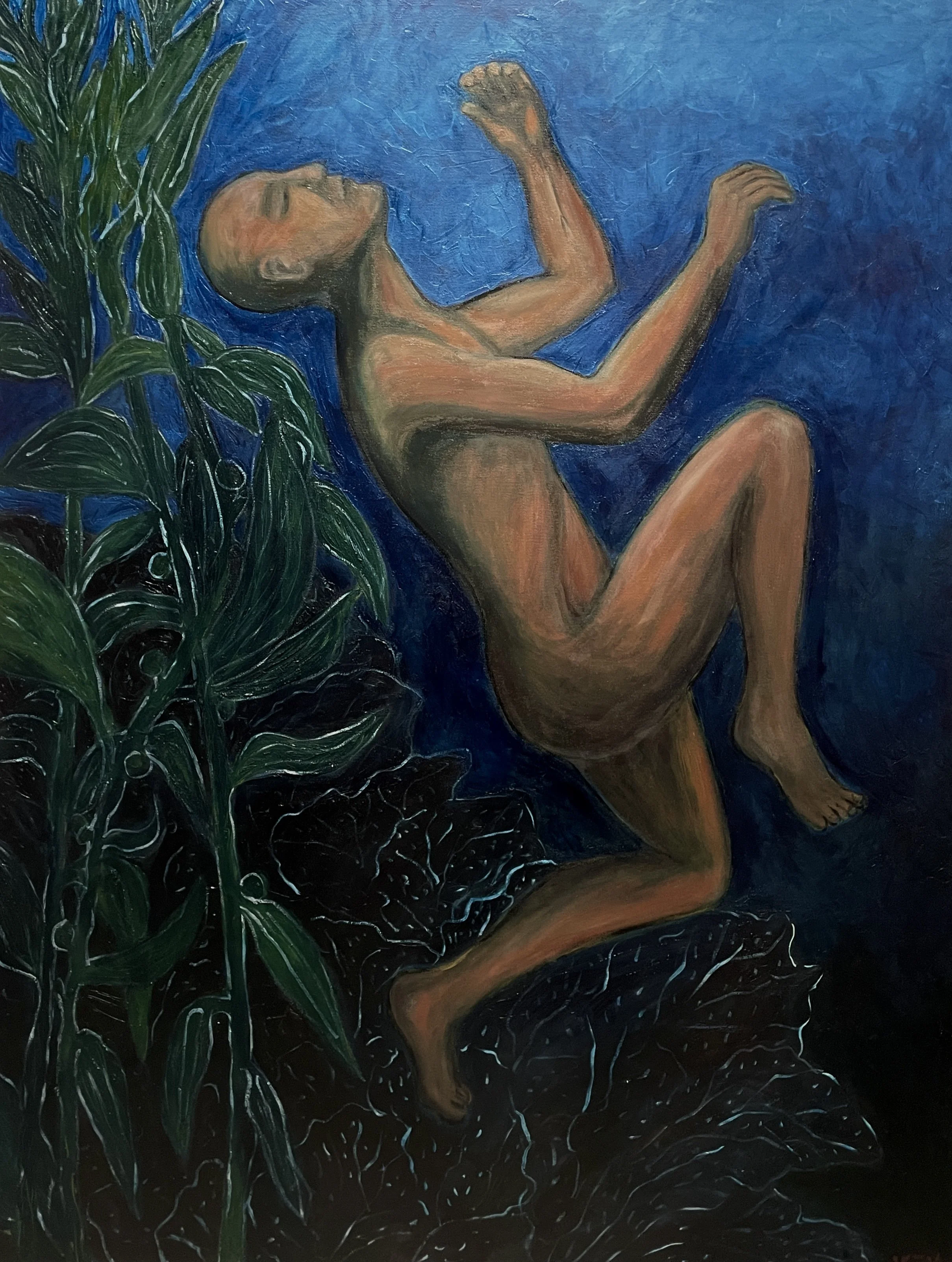
Janet Elizabeth Thomas, Oil and tempera on canvas, 110 × 145cm
In Psalm 1, Janet Elizabeth Thomas stages the body at the moment of unmooring. Suspended between earth and an enveloping blue expanse, the figure tilts backward in a gesture that is neither fully fall nor fully surrender. The raised arms suggest a fragile negotiation—between resistance and appeal, between the instinct to protect and the impulse to reach beyond oneself.
A dense vegetal form anchors the left of the composition, its rooted vitality set against the figure’s precarious drift. This contrast sharpens the painting’s central tension: the certainty of the natural world against the instability of human experience. The ground fractures into darkness beneath the figure, offering no secure footing, while the surrounding blue oscillates between water and sky—an indeterminate space of passage.
Rendered in oil and tempera, the surface carries both weight and luminosity, allowing the body to emerge and dissolve simultaneously. Here, Thomas introduces the thematic core of the Psalms series: the exposed human form as a site of spiritual encounter, where falling becomes a form of address, and uncertainty its own kind of prayer.
Janet Elizabeth Thomas, Oil and tempera on canvas, 110 × 145cm
In Psalm 1, Janet Elizabeth Thomas stages the body at the moment of unmooring. Suspended between earth and an enveloping blue expanse, the figure tilts backward in a gesture that is neither fully fall nor fully surrender. The raised arms suggest a fragile negotiation—between resistance and appeal, between the instinct to protect and the impulse to reach beyond oneself.
A dense vegetal form anchors the left of the composition, its rooted vitality set against the figure’s precarious drift. This contrast sharpens the painting’s central tension: the certainty of the natural world against the instability of human experience. The ground fractures into darkness beneath the figure, offering no secure footing, while the surrounding blue oscillates between water and sky—an indeterminate space of passage.
Rendered in oil and tempera, the surface carries both weight and luminosity, allowing the body to emerge and dissolve simultaneously. Here, Thomas introduces the thematic core of the Psalms series: the exposed human form as a site of spiritual encounter, where falling becomes a form of address, and uncertainty its own kind of prayer.